7 Free Synth Plugins That Actually Sound Professional 2026 Guide
August 16, 2026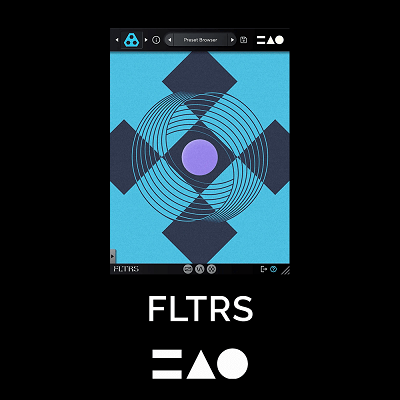
MNTRA Instruments FLTRS-LE is a free filter plugin for music producers, composers, and audio editors. It is the free edition of MNTRA’s larger FLTRS plugin. Instead of giving away a stripped-down collection of features, MNTRA gives FLTRS-LE one complete filter circuit called EUROPA-6. The circuit is based on the Roland Jupiter-6 filter design. MNTRA says it rebuilt the circuit at component level, including its OTA gain stages, state-variable filter topology, component tolerances, and nonlinear behavior.
FLTRS-LE is an audio effect, not a synthesizer. It needs an existing audio signal. You can put it on a synth, bass, drum loop, vocal, sample, bus, or sound-design track and use the filter to change the tone and movement.
- The free edition has one algorithm and nine presets. The full FLTRS has 37 circuits and 300 presets, along with an envelope follower, AniMod XYZ macro system, parametric EQ, and dual-mode limiter.
- Is one well-developed filter worth keeping in a free plugin folder? For most producers who like analog-style filter movement, the answer is yes.
- The bigger question is whether EUROPA-6 offers something your current filters do not.
Review
FLTRS-LE has a focused design. It does not try to be a complete mixing suite.
You get one filter. You learn that filter. Then you decide if its sound and controls fit your work.
That is actually a sensible approach for a free plugin.
The main circuit is EUROPA-6, which MNTRA describes as its reconstruction of the Roland Jupiter-6 filter. The company makes a stronger claim than a normal “Jupiter-style” description. It says the circuit itself was reconstructed, rather than only modeling the sound produced by the original hardware.
That claim comes from MNTRA, so it should be treated as developer information rather than independent proof of hardware equivalence.
There is, however, some independent technical work worth noting. An April 2026 PluginDoctor analysis published by an electronics engineer reported measurable nonlinear behavior from FLTRS-LE, including THD of about -48.4 dB and intermodulation distortion of about 48.13% under the author’s test conditions. The analysis also reported high-frequency aliasing. Those numbers come from that specific test setup and should not be treated as universal specifications for the plugin.
That is more useful than simply saying the plugin “sounds analog.” It gives us a measurable reason to expect nonlinear behavior.
EUROPA-6 Is the Main Reason to Download It
The EUROPA-6 filter has the usual cutoff and resonance controls, but MNTRA also adds drive and several controls that are not part of a basic filter.
The official product page describes the circuit as a Roland Jupiter-6 dual state-variable filter with OTA drive. MNTRA also lists negative resonance, parallel band-split processing, stereo detune, and vintage aging.
This makes FLTRS-LE more interesting as a sound-design effect than as a simple frequency-cutting tool.
A normal DAW filter can remove the top end of a pad.
FLTRS-LE can do that too.
The difference comes when you push the resonance, add drive, automate the cutoff, or use the less conventional controls. At that point, the filter becomes part of the sound rather than simply cleaning it up.
The Filter Has Some Measurable Nonlinear Behavior
One independent analysis of FLTRS-LE used PluginDoctor rather than relying only on listening tests. The author reported around -48.4 dB THD and 48.13% IMD in the measured test. The same analysis also pointed to high-frequency aliasing.
Those results are interesting because they give context to MNTRA’s emphasis on nonlinear circuit behavior.
They also show why calling FLTRS-LE a transparent EQ would be misleading.
The plugin is intended to alter the source.
The exact amount of distortion you hear will depend on the input, cutoff, resonance, drive, sample rate, and other settings. The published measurements are therefore best used as evidence that nonlinear processing exists, not as a promise that every preset produces the same distortion level.
Negative Resonance Changes the Usual Filter Sweep
Negative resonance is one of the most useful unusual features in the free edition.
With normal resonance, energy builds around the cutoff frequency. Negative resonance changes the response in the other direction and can create a notch-like effect. MNTRA specifically describes the feature as “notch instead of peak.”
That gives you another type of filter movement.
It can work well on pads, drones, synth loops, percussion, and transition sounds.
For example, a normal low-pass sweep can make a build sound familiar. A negative-resonance sweep can produce a more hollow change in the middle of the sweep.
It is not automatically better. It is simply another sound to work with.
Parallel Band-Split Processing Adds More Control
FLTRS-LE also has a parallel band-split path.
This is useful when a simple one-filter pass does not give enough movement. Different frequency areas can take part in the processing, which makes the effect more suitable for complex loops and sound-design material.
On drums, this can help change the tonal balance while keeping the original rhythm intact.
On a synth loop, it can make the filter movement more obvious.
This feature is also one reason FLTRS-LE is better viewed as a creative filter rather than a basic utility filter.
Stereo Detune Can Make Static Sounds Move
Stereo detune gives the filter a stereo dimension.
Instead of treating the left and right channels as exactly the same, the processing can create differences between them. That can make pads, textures, and stereo effects feel more active.
This is useful for ambient and cinematic work.
It is less attractive on a bass that needs to stay firmly in the centre.
Always check important stereo effects in mono. A wide filter effect may not translate in the same way after the stereo signal is summed.
Vintage Aging Is About Variation
FLTRS-LE also includes vintage aging drift.
The idea is not to turn a clean digital filter into a literal old hardware unit. It introduces controlled variation in the processing.
That can be useful on long pads and sustained textures.
A tiny amount can help a static sound move. A larger amount becomes an audible effect.
The control is therefore more useful when treated as a sound-design tool than as a “make it analog” button.
How Producers Can Use It on Synths
Synths are probably the easiest place to understand FLTRS-LE.
Insert it after a software synth. Start with the cutoff fairly open. Then move it slowly.
Add resonance.
Then try drive.
Once you find a useful movement, automate the cutoff.
A bass can open during a fill. A pad can become brighter before a chorus. A lead can lose its high frequencies at the end of a phrase.
The plugin is especially useful when the filter movement needs to be heard as part of the arrangement.
It Works on Drums Too
FLTRS-LE does not need a synth as its source.
MNTRA presents the full FLTRS system for use with synths, vocals, drums, buses, and sound-design chains. The LE version is the same type of audio effect, centered on EUROPA-6.
Try it on a drum loop.
Automate the cutoff during a build. Increase resonance for a transition. Use more extreme settings on a duplicate track and blend it with the dry loop.
This approach is often more useful than putting a filter directly on the master bus.
It Can Be Useful for Composers and Editors
For composers and audio editors, the plugin has another use.
You can process recorded material.
A field recording can become a moving texture. A metallic hit can become a transition. Foley can be pushed toward a synthetic sound. A drone can gain movement without adding another instrument.
That makes FLTRS-LE useful for film, game, trailer, and experimental sound design.
The source does not matter as much as the movement you want to create.
What Real Users Are Saying
The available user discussion is still limited because FLTRS-LE only launched in 2026.
That limitation is important. It would be misleading to present a handful of early comments as a broad consensus.
KVR currently shows zero user reviews for FLTRS-LE. It does show two members who have added the plugin to their MyKVR groups.
Reddit discussion is also still small. In the r/FREEVSTS launch thread, the original post received 4 upvotes, but the post was made by someone representing MNTRA, so it should not be treated as independent user approval.
A more useful independent discussion appears on KVR.
One user welcomed the free LE version as a way to try a single filter. Another user immediately pointed out that the free version still requires MNTRA’s distribution or product software to be installed.
Another KVR participant complained about animated GUI elements and said that this type of interface was a deal-breaker for them. The same discussion also noted the lack of an earlier traditional demo and the need to rely on videos to evaluate the sound.
Those comments reveal two practical points.
First, FLTRS-LE solves the “I need to hear it before paying” problem better than the paid-only launch did, because the single circuit is now free.
Second, the software ecosystem and interface may matter to some users as much as the filter itself.
That is worth knowing before installing it.
Independent Listening and Technical Analysis
The strongest independent technical evidence found so far is the PluginDoctor analysis mentioned earlier.
The author is a former electronics development engineer and used measurement tools to examine the plugin. Their analysis reported measurable nonlinear behavior rather than relying only on subjective listening.
There are also several early video demonstrations and reviews listed directly by MNTRA, including reviews from CoinxDaProducer, Plugin Culture, and AnDerington. The official page also includes a no-talking demo and a track-building demonstration.
These videos are useful for hearing the plugin in context, but they are not independent laboratory tests.
The evidence is therefore best separated into three groups:
- Developer evidence: MNTRA’s circuit design, features, formats, and compatibility claims.
- Independent technical evidence: PluginDoctor measurements of nonlinear behavior.
- Early user/community evidence: limited KVR and Reddit discussion, with no established KVR review average yet.
That is a more accurate picture than claiming that “users love it.”
There simply is not enough independent user data yet.
FLTRS-LE vs Full FLTRS
The free version gives you one circuit.
The full FLTRS gives you 37 circuits across eight families and 300 presets. The paid version also includes an envelope follower, AniMod XYZ macro system, parametric EQ, and dual-mode limiter.
MNTRA currently lists the full version at $79 on its own website. Plugin Boutique currently shows a $49 sale price and a 4.7/5 rating from six ratings for the full FLTRS product. That rating is for FLTRS, not FLTRS-LE, so it should not be used as a rating for the free edition.
The difference is important.
If you like EUROPA-6 and only need one filter, you may never need the full version.
If you want several vintage filter types, experimental processors, spectral effects, and additional modulation tools, the paid version has a much broader purpose.
What FLTRS-LE Does Well
The strongest part of FLTRS-LE is its focus.
You are not asked to learn 37 algorithms.
You get EUROPA-6.
You can spend time learning how its cutoff, resonance, drive, negative resonance, stereo detune, and aging controls affect a source.
That makes the plugin easy to test in a real session.
It also helps that the main algorithm is fully unlocked. MNTRA describes the LE version as one circuit with nine presets rather than a time-limited demo. Its current shop also lists FLTRS-LE as a free effect.
What FLTRS-LE Does Not Do
FLTRS-LE is not a replacement for a surgical EQ.
It also does not give you the full FLTRS collection.
You do not get the 36 other algorithms, 300-preset library, envelope follower, AniMod XYZ macro system, parametric EQ, or dual-mode limiter included in the paid version.
There is also limited independent user feedback so far. KVR currently lists no user reviews for the LE version.
That means you should judge the plugin with your own material.
The good news is that you can do that without paying for the LE version.
Licensing and Installation
FLTRS-LE is free, but it is not a completely account-free download.
MNTRA says the plugin uses an MNTRA account for authorization and does not require an iLok or physical USB dongle. The official product page says the free version goes through checkout so the download and license can be attached to the account.
This point also appeared in early KVR discussion. One user specifically noted that the free version still required MNTRA’s distribution or product system.
That is a minor inconvenience for most users, but it is worth mentioning because “free” and “no account required” are not the same thing.
My Practical Take
Based on the available product information, independent measurement, and early community discussion, FLTRS-LE makes the most sense as a character filter.
Do not install it because you need another transparent low-pass filter.
Install it because you want to hear what EUROPA-6 does to your own material.
That is the test that matters.
Put the same bassline through your normal DAW filter and FLTRS-LE. Match the output level. Automate the cutoff. Push resonance. Try negative resonance. Then compare the results in the context of the full mix.
If FLTRS-LE gives you a movement or texture that you cannot get easily from your existing tools, it has earned its place.
If the difference is too small to matter, there is no reason to keep another filter just because it is free.
Features
- EUROPA-6 filter circuit: MNTRA’s reconstruction of the Roland Jupiter-6 filter concept.
- Dual state-variable filter design: MNTRA identifies EUROPA-6 as a Jupiter-6 dual SVF with OTA drive.
- Component-level approach: MNTRA says it modeled OTA gain stages, SVF topology, component tolerances, and nonlinearities.
- Negative resonance: Produces a notch-style response instead of the usual resonant peak.
- Parallel band-split path: Adds another processing path for shaping the source.
- Stereo detune: Adds variation between the stereo sides.
- Vintage aging drift: Introduces controlled variation into the filter behavior.
- Drive: Adds another level of nonlinear tone shaping to the EUROPA-6 circuit.
- 9 Atelier presets: Provides starting points for the free circuit.
- Fully unlocked LE circuit: The free version does not lock the EUROPA-6 controls.
- VST3, AU, and AAX: Available as 64-bit plugin formats for Mac and Windows.
- Apple Silicon and Intel: MNTRA lists support for both Mac processor types.
- No iLok dongle: Authorization uses an MNTRA account.
- Free price: MNTRA currently lists FLTRS-LE as a free effect.
System Requirements
MNTRA currently lists FLTRS-LE for macOS 10.11 or later and Windows 10 or later. It supports Apple Silicon and Intel Macs and is available in 64-bit VST3, AU, and AAX formats.
| Requirement | FLTRS-LE |
|---|---|
| Plugin type | Audio effect |
| Price | Free |
| macOS | 10.11 or later |
| Windows | Windows 10 or later |
| Mac CPU | Apple Silicon and Intel |
| Formats | 64-bit VST3, AU, AAX |
| Included circuit | EUROPA-6 |
| Presets | 9 |
| Authorization | MNTRA account |
| iLok | Not required |
MNTRA describes the full FLTRS as using low-CPU DSP and says it is designed to be chained across synths, vocals, drums, buses, and sound-design chains.
Note: MNTRA does not publish a specific minimum RAM or CPU requirement for FLTRS-LE on the current product page. It would therefore be wrong to invent a processor or memory requirement. For CPU testing, the sensible approach is to load several instances in your own DAW and watch the DAW’s CPU meter. Results will depend on the DAW, buffer size, sample rate, operating system, and other plugins in the session.
Conclusion
MNTRA Instruments FLTRS-LE is one of the more interesting free filter releases because its limitation is clear.
You get one complete filter circuit, not a collection of crippled features.
That circuit is EUROPA-6, MNTRA’s Jupiter-6-inspired design. The company says it reconstructed the circuit at component level and added features such as negative resonance, parallel band splitting, stereo detune, and vintage aging.
Independent measurement also gives the plugin more substance than a simple marketing description. A PluginDoctor analysis reported measurable nonlinear behavior, including approximately -48.4 dB THD and 48.13% IMD under its test conditions. Those figures are useful evidence of nonlinear processing, but they should not be treated as fixed specifications for every setting.
The early user picture is less certain.
KVR currently has no user reviews for FLTRS-LE. Early discussion includes positive interest in the free single-circuit version, but also complaints about the animated interface and the extra installation or account layer.
That means the fairest conclusion is not that FLTRS-LE is universally better than other filters.
It is simpler than that.
FLTRS-LE is worth trying if you want a free filter with a strong character and unusual resonance options.
For synths, basses, drums, pads, transitions, field recordings, and sound design, it has a useful role. For corrective EQ work, use a dedicated EQ instead.
The best part is that there is no need to decide from specifications alone. The EUROPA-6 circuit is free and fully unlocked.
Put it on your own sounds.
Match the levels.
Automate the cutoff.
Push the resonance.
Try the negative-resonance mode.
Then decide if the difference matters in your music.
That is a much better test than any five-star rating.
Try FLTRS-LE Free
Download the EUROPA-6 circuit and hear it on your own material before deciding anything else.